Paying Polluters Twice
How Washington is Undermining Markets, Clean Energy, and Public Health

US climate and energy policy has entered a strange new phase. Instead of letting markets drive a cheaper, cleaner energy transition, the federal government is now spending public money to keep old fossil assets alive. . . and to slow their replacement by cleaner alternatives.
Over the past year, Washington has leaned on federal agencies and new spending to support coal and other fossil fuels that can no longer compete on their own economics. At the same time, it has begun paying to halt or unwind major clean energy projects, even when private capital was ready to proceed.
In effect, taxpayers are paying polluters twice. First, we subsidize high‑cost, high‑pollution power plants that markets would otherwise retire. Then we pay again to block or buy out cleaner projects that could replace them at lower long‑term cost.
That is not a market failure. It is a political choice.
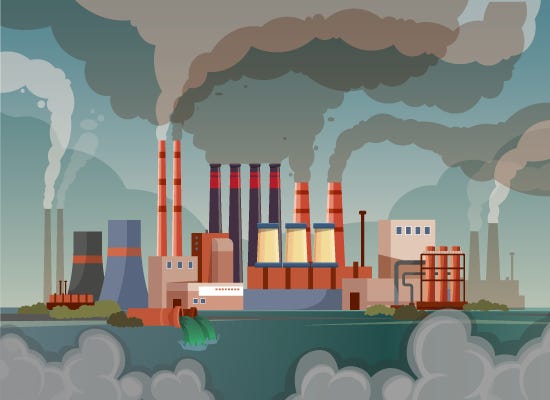
The New Coal Protection Program
In pure climate terms, coal remains the dirtiest of the major fuels, emitting far more carbon dioxide per unit of electricity than gas, and vastly more than wind or solar. In public health terms, coal plants release particulates, sulfur dioxide, nitrogen oxides, and mercury—pollution linked to asthma, heart disease, and premature death, especially in nearby communities.
Economics has been pushing coal out for years. The cost of utility‑scale solar and wind has fallen dramatically over the past decade, and, in much of the country, new renewables are now cheaper than new fossil power and often competitive with existing plants. Private capital has responded: renewables and storage dominate new capacity additions, while coal’s share of US electricity generation has dropped into the teens.
In a sane policy framework, the government would be helping that market trend along—managing worker and community transitions, investing in grids and storage, and accelerating the replacement of high‑cost, high‑risk assets. Instead, new federal initiatives are channeling hundreds of millions of dollars into keeping coal plants running longer than markets alone would allow, and into associated coal infrastructure that would otherwise be headed for orderly retirement.
Step back from the political noise and look at the economic logic: we are using public funds to sustain a fuel that is both more expensive and more harmful than the alternatives, even before we count its climate and health costs. That is the opposite of prudent risk management.
Paying Not to Build Clean Energy
The second half of the story is even more perverse.
In March 2026, the federal government agreed to pay approximately $1 billion to TotalEnergies to relinquish two US offshore wind leases. The company has made clear it will redirect that capital into liquefied natural gas and other fossil fuel projects.
Think about what that means in capital‑allocation terms. The state did not merely pause a project. It wrote a very large check to ensure a clean energy project would never be built—and, in the same stroke, helped finance new fossil infrastructure instead.
Nor is this just one bad headline. It reflects a broader pattern: slow‑walking or blocking offshore wind approvals, then compensating developers when projects can no longer advance under the revised rules. The message to investors is clear: when politics change, clean energy projects can be unwound, and fossil fuels will be favored in the settlement.
This is where the “paying polluters twice” dynamic comes into full view. On one side of the ledger, taxpayers are funding the extended life of uncompetitive coal. On the other side, taxpayers are compensating companies to walk away from large‑scale clean energy projects that were poised to move forward. We pay to keep the incumbent alive; we pay again to keep the challenger off the field.
If this pattern were playing out in an emerging market, investors would call it what it is: a politically driven misallocation of capital.
Climate Risk is Already on the Balance Sheet
None of this is happening in a vacuum.
The economic costs of climate change are no longer theoretical. In recent decades, the number and cost of billion‑dollar weather and climate disasters in the United States have risen sharply, with damages now routinely measured in the tens of billions per year and trillions cumulatively. Those costs are showing up in federal and state budgets, in municipal balance sheets, and in household finances.
Insurance markets are sending similar signals. Premiums in high‑risk regions are jumping; in some places, coverage is being withdrawn altogether. Reinsurers are repricing risk in real time. Markets do not argue ideology—they price what they see.
Coal and other high‑emission fuels sit at the center of that risk story. Continuing to subsidize them means shifting more costs forward onto taxpayers, consumers, and future budgets, even as cheaper, lower‑risk alternatives exist. It is difficult to imagine a clearer example of policy working against both economic and environmental self‑interest.
What a Free Market Would Do
Markets are trying to do their job. The deeper irony here is that many of us spent years trying to get markets to incorporate environmental reality. We pushed for carbon pricing, clean energy tax credits, disclosure rules, and risk analysis so that private capital would follow true costs rather than outdated assumptions. To a meaningful extent, that work has paid off. Investors now recognize that renewables and storage are scalable, cost‑competitive, and aligned with long‑term risk reduction. Fossil fuels with high emissions and high regulatory and physical risks are, in many contexts, losing ground on their own merits.
Left to itself, this is what the market would do: expand lower‑cost, lower‑risk energy; shrink higher‑cost, higher‑risk sources; and direct capital toward innovation, resilience, and efficiency.
But policy is no longer just lagging that reality—it is actively fighting it. Federal decisions to subsidize declining coal assets, to slow‑roll clean infrastructure, and to pay developers to abandon wind projects all point in the same direction: distort price signals, protect incumbents, and delay change.
That is not good climate policy. It is not good economic policy. And it is certainly not good capitalism.
What Accountability Looks Like
So what should concerned citizens—especially those who care about markets, fiscal discipline, and public health—do with this information?
First, we need to tell the story plainly. Taxpayers are being asked to fund more pollution, higher long‑term costs, and greater climate and health risks, even when cheaper clean alternatives are available. We are paying polluters twice and calling it energy policy.
Second, we should frame the issue in terms that resonate beyond the climate community. These choices raise energy costs over time, burden local communities with dirtier air, and amplify risks that are already showing up in insurance markets, municipal finances, and federal disaster spending. This is about the affordability and resilience of the real economy.
Third, we should treat this as a question of accountability. When governments override market signals to favor higher‑cost, higher‑pollution outcomes, voters have every right to ask: who benefits, who pays, and why are we subsidizing decline?
The Instigator doesn’t tell readers which candidates to support. But we do encourage you to look closely at the record, not just the rhetoric. When you see policies that pay polluters twice—first to stay, then to keep their cleaner competitors out—you are seeing a choice about what kind of economy, energy system, and climate future we are going to have.
That is a choice worth voting on.
Onward,
Arguably, there's a third payment in here...from polluters to the politicians that promote these backward-looking policies. As you say, pay attention to who benefits from all of this.
The craziness continues. Our federal government again pays hundreds of millions of dollars to developers of clean energy to cancel their projects. See here:https://heatmap.news/energy/trump-invenergy-wind-deal. If you think this makes sense, please explain how.