
AI’s newfound omnipresence can lend it a deceptively light feel. You power on a laptop or phone and there it is, accompanying you wherever your work or pleasure may take you.
But there is a big, concrete side to all that cloud computing: the data centers housing the routers, wires, cooling and storage systems, servers, and huge generators that make it all happen. The buildout of these enormous infrastructures (some will be the size of airports!) is happening fast and right across the US, often in rural areas where land and energy are cheaper.
That’s both a big opportunity and a big challenge.
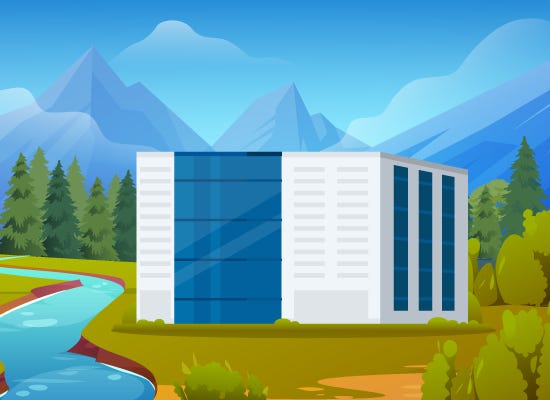
On one hand, these projects bring jobs and investment to communities that could benefit from them. On the other hand, they raise legitimate concerns: water use (still significant, though cooling technologies are rapidly improving), destruction of habitat for wildlife, loss of outdoor recreation areas, noise, visual blight, and infrastructure stress. It’s giving rise to NIMBYism* as neighbors worry that this new tech boom will trample the landscapes they love and bring down their home values.
And yet, if we want the U.S. to lead in AI (and for our economy to continue to thrive), we need these data centers.
The question isn’t really whether to build them, but how to build them in a way that makes sense for people and nature alike.
When I was at The Nature Conservancy, we had a framework for scenarios just like this. We called it Development by Design. It was built on the belief that questions about growth and infrastructure are rarely answered best in a binary way. So we tried to move the discussion from a simple yes or no to how.
How can we have both the benefits of new infrastructure and also good outcomes for communities and for nature?
This shifts the focus to possibilities rather than limitations and encourages creativity and collaboration rather than defaulting to status quo.
To answer this question in line with our goals, we used what is known as the “mitigation hierarchy” in conservation circles:
Avoid harm to communities and nature wherever possible.
Minimize the impacts that can’t be avoided.
Offset those that remain by protecting or restoring comparable ecosystems nearby.
This generally worked very well for the big and controversial infrastructure projects we considered in the energy, mining, and chemical sectors. And it should work for data centers too.
Imagine a transparent, science-based national framework that clarifies where and how data centers can be built responsibly. One that gives rural communities a seat at the table, aligns developers and conservationists, and shows policymakers that this doesn’t need to be another partisan issue. Rather, per Ezra Klein and Derek Thompson’s prominent book, it can be a pathway toward “abundance.”
We can power the AI revolution while protecting water, land, and wildlife.
And the additional benefit: The U.S. can lead not just in AI innovation, but in modeling how to do development the right way.
Of course, I’m not suggesting that any of this will be easy. It requires people of good will to deliberate together and find ways to compromise in a timely fashion. And there would remain additional issues to address—like how we ensure everyday consumers don’t see their electricity bills soar as the data center buildout happens.
If I were running a big conservation NGO today, I’d jump on this. It’s a rare, actionable opportunity to bridge rural and urban interests, grow the economy, and safeguard nature—together.
And if I were the CEO of a hyperscaler like Microsoft or Google in the midst of a very competitive race (land grab) to build out data centers, doing it in a community- and nature-friendly way like this would probably be a savvy way to gain significant competitive advantage.
So leaders, what do you say? Ready to make this our next great win-win frontier?
Onward,

*Not In My Backyard. An implicit recognition that something may be valuable but inconvenient to to bear locally.